

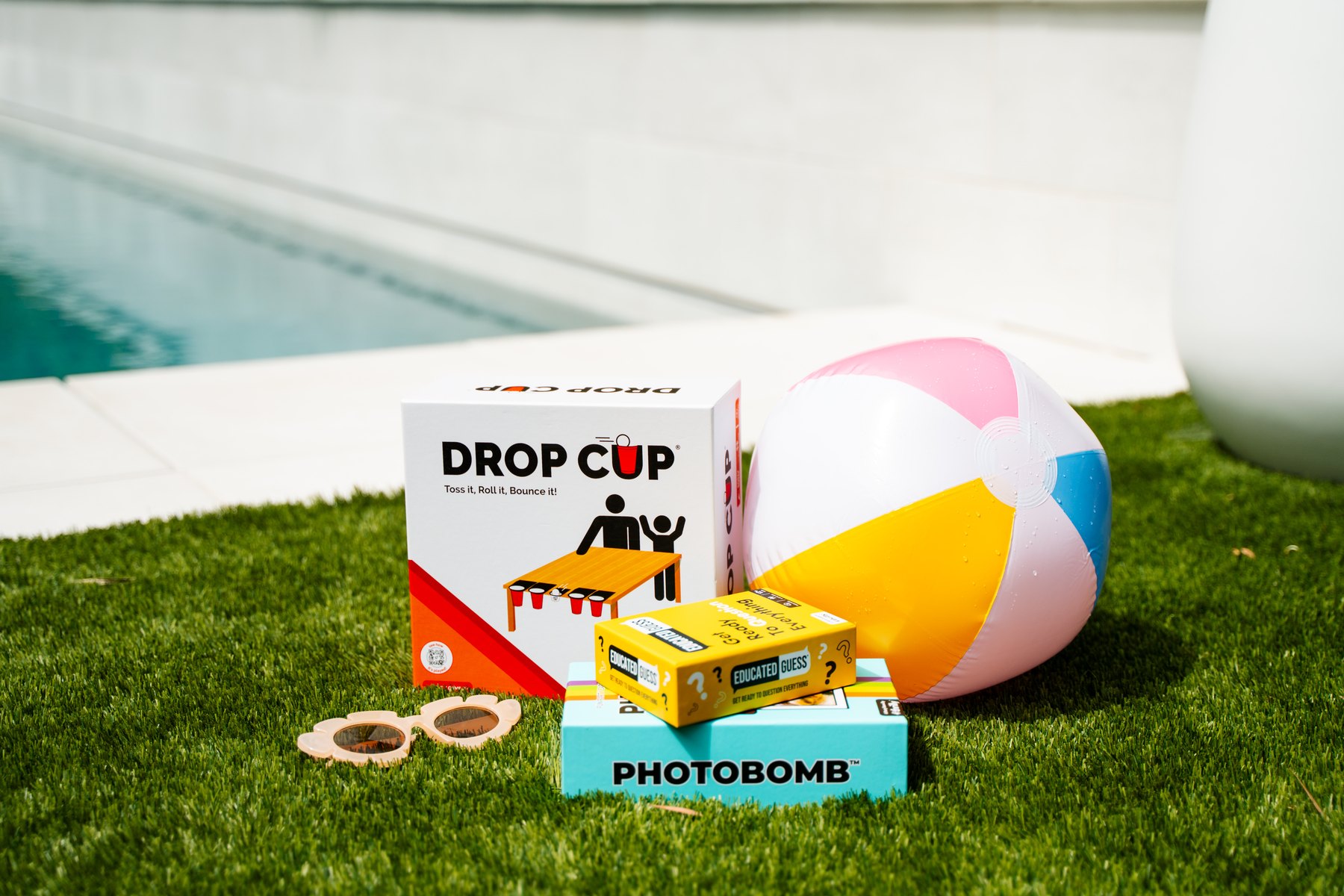
An adult party card game has one job: to make a room of people who already like each other laugh within sixty seconds of the lid coming off. Nothing else on the box matters. Not the card stock, not the art, not the number of cards printed on the side. We have playtested enough duds to be blunt about it, and this guide is the short version of what we learned.
Below: what separates a great party game from a box that dies on the table, the five types worth knowing, the famous titles inside each type, and where our own eight boxes sit among them. If you want the one-line answer, it is at the top of the page.
What makes a great adult party card game
Four tests, and cleverness is not one of them. A party game has to teach in under a minute, land a laugh in the first round, scale to a headcount nobody confirmed, and end while the room still wants another go. A game that fails any one of those is a card game you happen to play at a party rather than a party game.
The teaching test is the brutal one. Say the rules out loud while you deal the first hand. If you cannot, the game is already in trouble, because at a party nobody is going to read a rulebook and three people will arrive late and need teaching again.
- Teachable in one sentence with one verb in it.
- A laugh inside the first round, not the third.
- Works at four players and at twelve without a rules change.
- A round that ends in fifteen to thirty minutes.
The fourth test gets ignored most often. A game with no natural ending is a game somebody has to kill, and killing a game is awkward. Good party games have a built-in finish line: a deck that runs out, a score you reach, a round count you agree on before you start.
- Red flag: a setup phase with more than three steps.
- Red flag: a scoring sheet.
- Red flag: a first round that is explicitly a practice round.
- Red flag: a rules insert printed on both sides in six-point type.
The five types of adult party card game
Almost every box on the shelf is one of five shapes. Knowing which shape you are buying tells you more than any review score, because the shape decides how many players you need and what kind of sense of humor the table has to share.
- Fill-in-the-blank: one player reads a prompt, everybody answers from their hand, a judge picks a winner.
- Social deduction: hidden roles, and the table has to work out who is lying.
- Clue-giving: one player creates a clue and the others try to guess the answer.
- Drawing and performing: the funny part is a human being doing something badly.
- Reflex and physical: the game is a race for an object in the middle of the table.
The five shapes do not mix well in one evening. A social deduction game needs the table quiet and watchful; a reflex game needs it loud and half standing. Pick one mode per hour and the night has a rhythm instead of a series of false starts.
- Three to five players: clue-giving or fill-in-the-blank.
- Six to eight players: social deduction, which is where it is best.
- Nine or more: reflex and performing games, because nobody waits a turn.
- Exactly two: a guessing game against a hidden target, not against each other.
Fill-in-the-blank, and what came after it
Cards Against Humanity is the game that created the modern adult party card game market, and it is still the reference point everybody argues about. The engine is simple: a prompt card with a gap, a hand of answer cards, a rotating judge. The joke is printed on the card, which is the strength and the weakness in one.
The strength is that it works at ten minutes past midnight with a table of strangers. The weakness is that the deck is finite and your group memorises the best cards within a few nights. Cards Against Humanity rewards a sense of humor that has already agreed to be awful; if the table has not agreed, the game is unpleasant rather than funny.
- Best at: four to eight players, late, with people you know well.
- Learning curve: none. Deal seven cards and start.
- Weakness: the printed joke ages, and the deck gets memorised.
- The fix most groups find: stop playing to win and start playing to the judge.
The whole category that followed it swapped the printed joke for a generated one. That is the single most important idea in adult party games for the last ten years: if the funny part comes out of your friends instead of off the card, the game never plays the same way twice. Our own group chat deck works exactly on that principle.
Social deduction: the one worth learning properly
Social deduction is the genre with the highest ceiling and the steepest learning curve. Secret Hitler gives each player a hidden party card and asks the table to pass legislation without letting the wrong team win; The Resistance: Avalon runs the same idea as a series of missions with a secret team of saboteurs. Both are card games with almost no components and both produce the best arguments of the night.
The catch is player count and patience. Secret Hitler wants at least five and really wants seven. Avalon is similar. Below that number there is nowhere for a liar to hide, and above ten the quiet players never get to speak. These are also the games most likely to need a second teaching round, so do not open one at the point in the evening when everybody is already loud.
- Secret Hitler: five to ten players, an hour, and one furious accusation per game.
- The Resistance: Avalon: five to ten, faster rounds, more deduction per minute.
- Both reward a group that plays the same game several times across months.
- Neither works if one player refuses to lie on principle.
If your group is new to the idea, start with a short cooperative-feeling version before a full hidden-role game. A game where players are broadly on the same side teaches the table to listen to each other, which is the skill social deduction actually tests.
- Teach with a five-minute demo round that does not count.
- Seat the loudest two players apart from each other.
- Agree a time limit per discussion phase or the hour disappears.
- Let the quietest player go first when clues are given.
Clue-giving: the sweet spot for most groups
Clue-giving games are the ones we recommend most often to a mixed table, because they are quick to teach, they scale, and nobody has to be funny on command. Monikers hands you a stack of named people and things and asks you to get your team to say the name with a clue, then a single word, then a gesture. Just One is cooperative: everybody writes a clue for one guesser and duplicate clues get cancelled, which creates a genuinely strange kind of teamwork.
Wavelength is the cleverest of the three. One player sees a hidden target on a spectrum between two opposites and gives a clue; the team moves a dial and tries to guess where the target sits. It is the rare party game where the fun is in being understood rather than in being loud, and it plays well at two players as a quiet challenge.
- Monikers: six to twelve, three rounds, the third round is always the best one.
- Just One: three to seven, cooperative, excellent with mixed ages.
- Wavelength: two to twelve, works in teams or as a conversation.
- All three are easy to pause when somebody arrives late.
The common thread is that the game gets out of the way. The idea on the card is a prompt and the content is whatever your table knows about each other. That is why a clue-giving game stays on a shelf for years while a printed-joke deck gets played hard for two months.
Drawing and performing games
A Fake Artist Goes to New York is the best small box in this corner of the genre. Everybody draws one line of a shared picture, but one artist does not know what is being drawn and has to fake it. It is social deduction and drawing at once, it teaches in forty seconds, and it plays in ten minutes.
Performing games have one requirement that nothing can fix: somebody at the table has to be willing to stand up. If your group will not, skip the whole category. If one person will, the rest usually follow by the second round, and that is the point at which a party stops being a dinner.
- Five to ten players is the band where a fake artist can actually hide.
- You need one pen per player and a surface, which rules out a crowded bar table.
- The draw order matters more than people expect, so change it each round.
- Ten minutes a game means you can play six without anybody noticing the hour.
Reflex and physical games
This is the corner we make most of our own boxes in, so take the enthusiasm with a pinch of salt. A reflex game puts an object in the middle of the table and makes everybody race for it when a condition is met. There is no turn order, which means there is no waiting, which means the game works at a headcount where every other type falls apart.
The competition is physical and immediate and the learning curve is nothing. The trade-off is that it is loud, it needs elbow room, and it is not a game you play sitting on a sofa with plates on your knees. A large group in a kitchen is its natural habitat.
- No turn order, so twenty players is as easy as six.
- Needs a table everybody can reach, which is the real player limit.
- Expect a knocked drink per hour and plan the surface accordingly.
- Pairs badly with anything fragile within arm's reach.
How many players you actually have
Headcount is a rumour until everybody arrives, so buy for the range rather than the invitation list. The honest numbers are usually narrower than the box claims: a game that says three to twenty means six to ten, and a game that says two to six usually means four.
- Two players: a guessing game against a hidden target.
- Three to five: clue-giving, or fill-in-the-blank with a judge.
- Six to eight: social deduction, at its best.
- Nine to twelve: performing games, or anything with no turn order.
- Thirteen and up: reflex games and teams, nothing else.
Large groups are the case most collections get wrong. The instinct is to buy the game with the biggest number on the box, but a fourteen-player round of anything turn-based means thirteen people watching one person think. Split into teams or pick a game where everybody acts at the same moment.
- Split a big room into two tables rather than one long round.
- Teams of three keep the quiet players involved.
- Rotate who explains the rules so one person is not hosting all night.
- Keep one ten-minute box in reserve for the gap while food arrives.
How long an hour of party cards really takes
Box times are optimistic. A game that claims thirty minutes runs forty-five the first time you play it and twenty-five once the table knows it. Plan the evening in slots of an hour and you will fit two games in comfortably, which is the right number.
The useful question is not how long a game takes but how long it takes to get everybody ready. A deck that needs shuffling, dealing and an explanation is ten minutes of overhead before the first laugh. That overhead, not the round length, is what decides whether the group plays twice.
- Short filler: ten minutes, no setup, play while people arrive.
- Main event: thirty to forty-five minutes, taught once, played twice.
- Closer: something loud and fast that ends on a high note.
- Never: a ninety-minute game started after eleven.
Sense of humor: matching the deck to the room
The most common bad purchase in this genre is a funny game bought for the wrong room. Adult party card games split roughly into mean, filthy, absurd and warm, and a deck from the wrong column does not get a second round no matter how good it is.
- Mean: the joke is at somebody's expense, and the table has to be close.
- Filthy: fine with friends, a disaster with a partner's parents.
- Absurd: the safest bet for a mixed group of adults.
- Warm: works with family in the room, which is a different shelf entirely.
If you are buying as a gift and you do not know the room, buy absurd. Nobody has ever been offended by a game about what a dog is thinking, and plenty of people have been offended by a prompt card they were handed at a dinner party.
Learning curve and teaching the rules
The person who teaches the game sets the tone of the night, so make the job small. Read the rules yourself before anyone arrives, write the one sentence you are going to say, and deal while you say it. Do not read the rulebook at the table; it is the fastest way to lose a room.
- Say what you are trying to do, in one sentence.
- Say what happens on your turn, in one sentence.
- Say how the game ends, in one sentence.
- Deal and start. Answer the rest of the questions during round one.
A game with a real learning curve deserves a planning decision rather than an improvisation. If you want to play something with hidden roles and a long arc, say so when you invite people and start it early, while everybody is still sharp.
Where the Thrilly boxes fit, box by box
Here is our own shelf against the same tests, with the shape each box belongs to. We make eight card games and nothing else, which makes this a short section rather than a catalogue.
Slap ’N Sip Reflex and physical
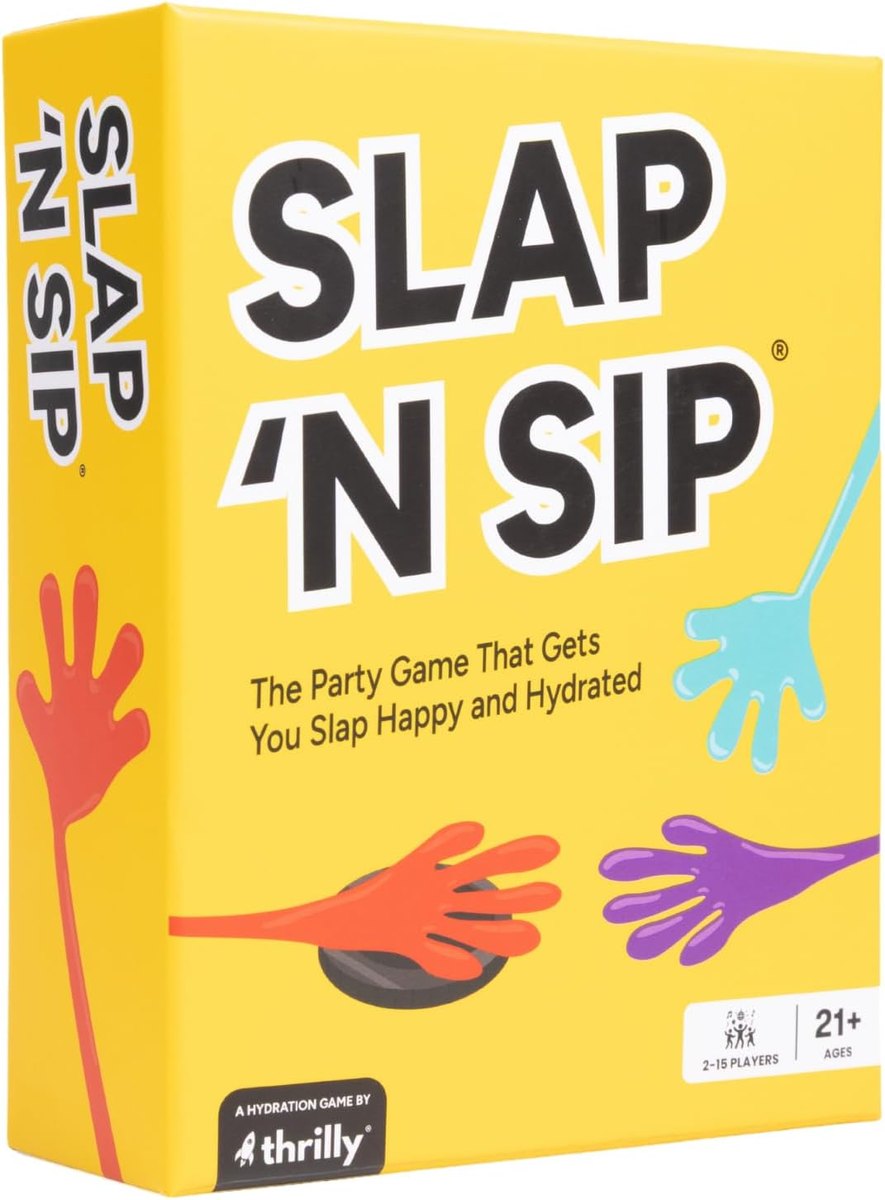
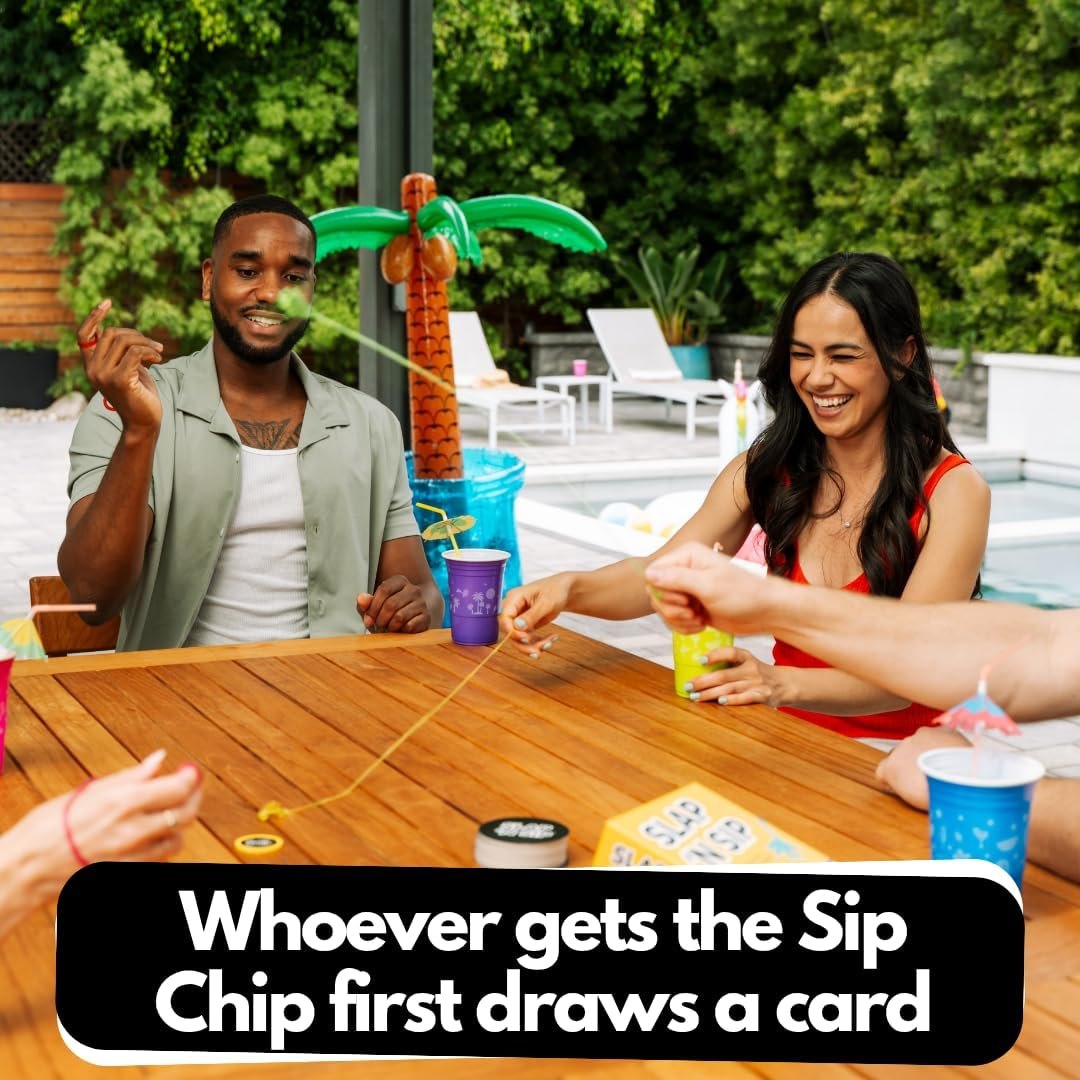
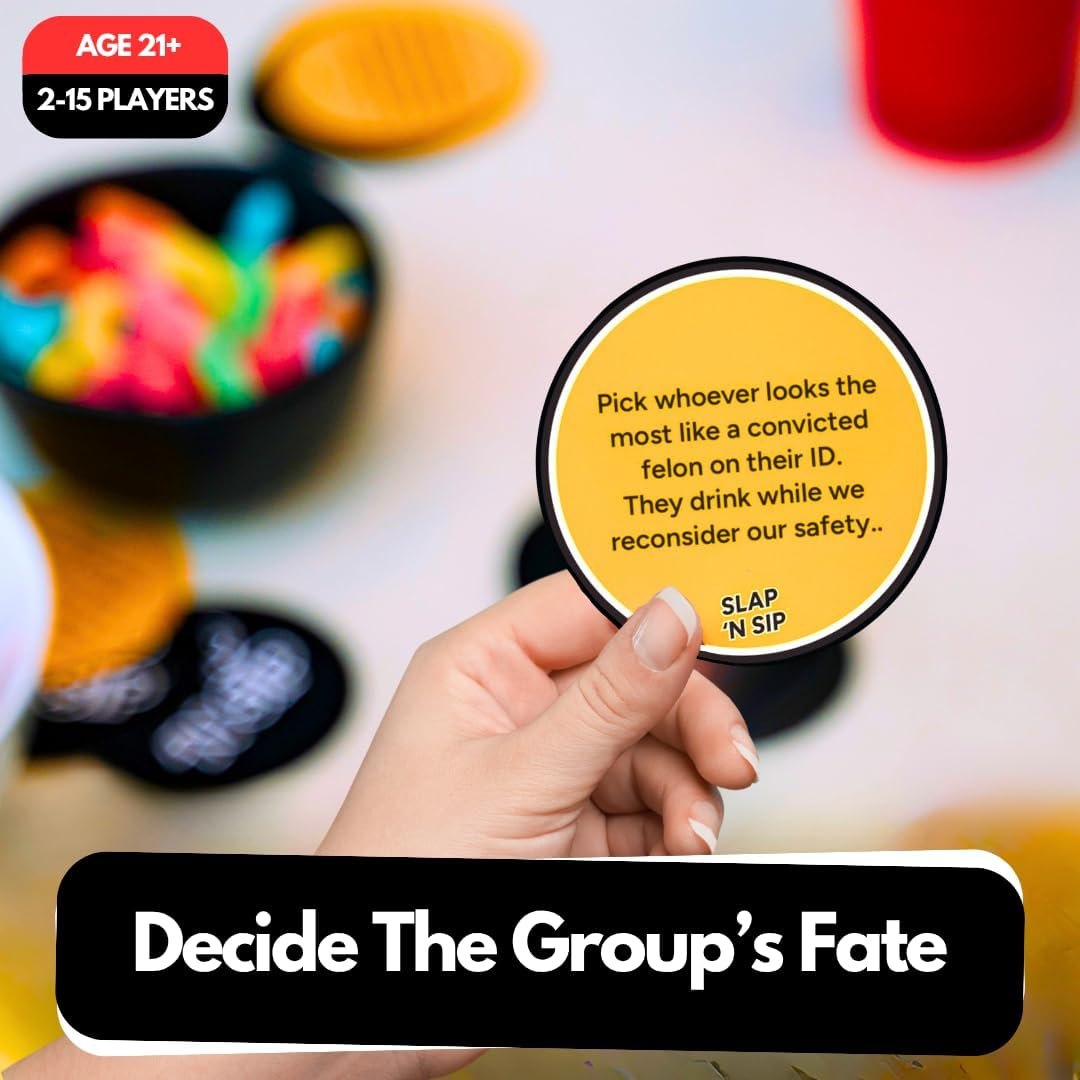
Twenty sticky hands, a deck of prompts and no turn order. The box we hand to a large group in a kitchen. Loud, over in twenty minutes, and the only one on our shelf that needs elbow room more than it needs clever players.
2–12 players players · 20 min rounds · age 21 · $17.99
DiagnosThis Clue-giving
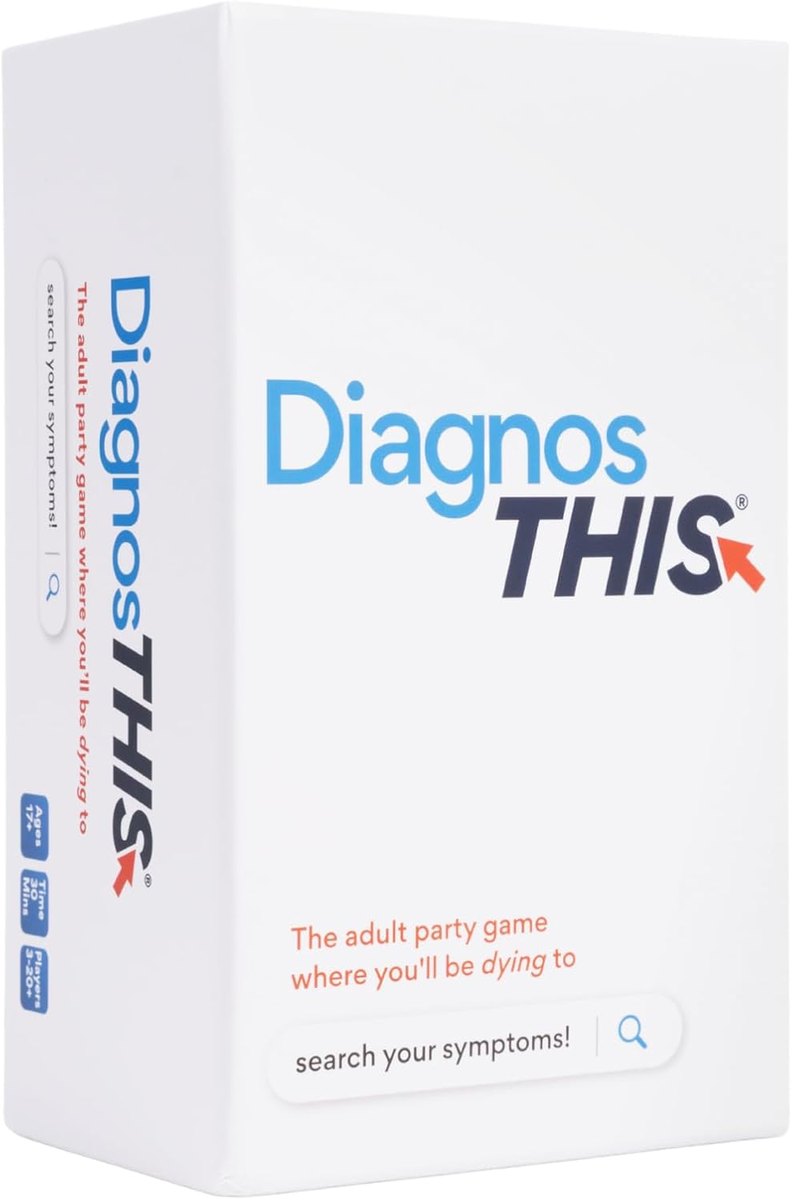
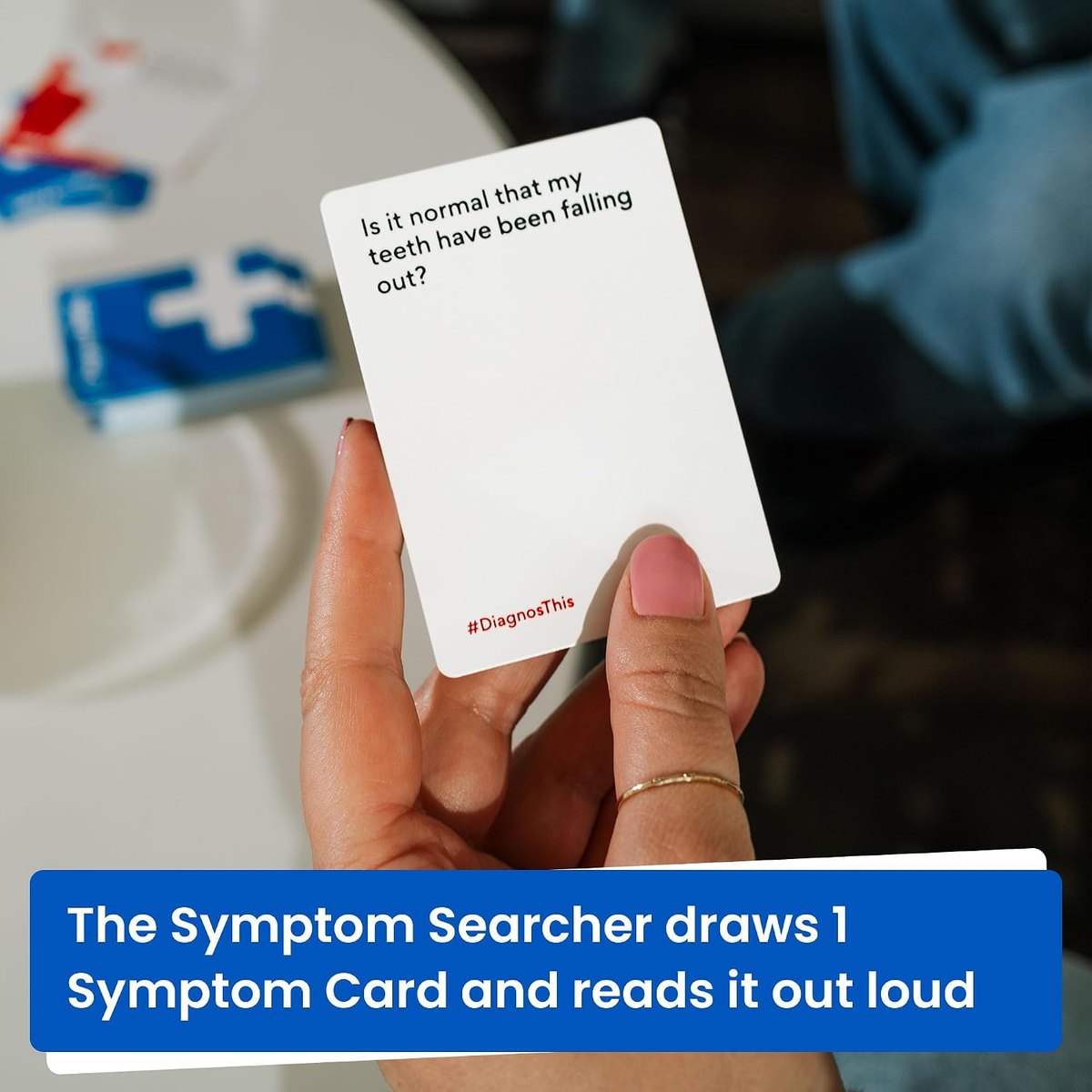
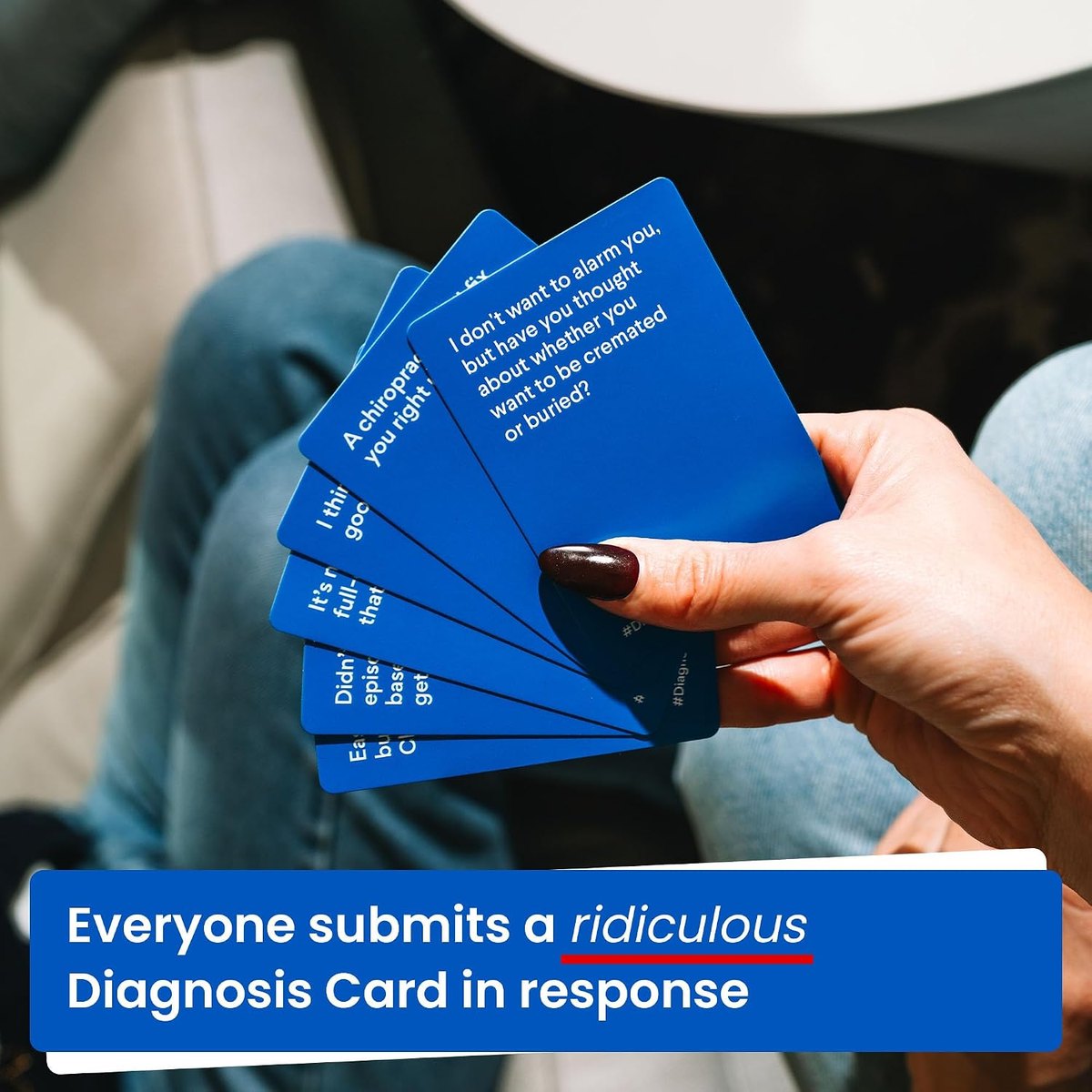
A set of symptoms is read out and the table competes to name the condition. The learning curve is a single sentence and the laugh comes from how confident everybody is while being wrong. Best at four to six.
3+ players players · 30 min rounds · age 17 · $19.99
Tinfoil Hat Club Clue-giving with an argument attached
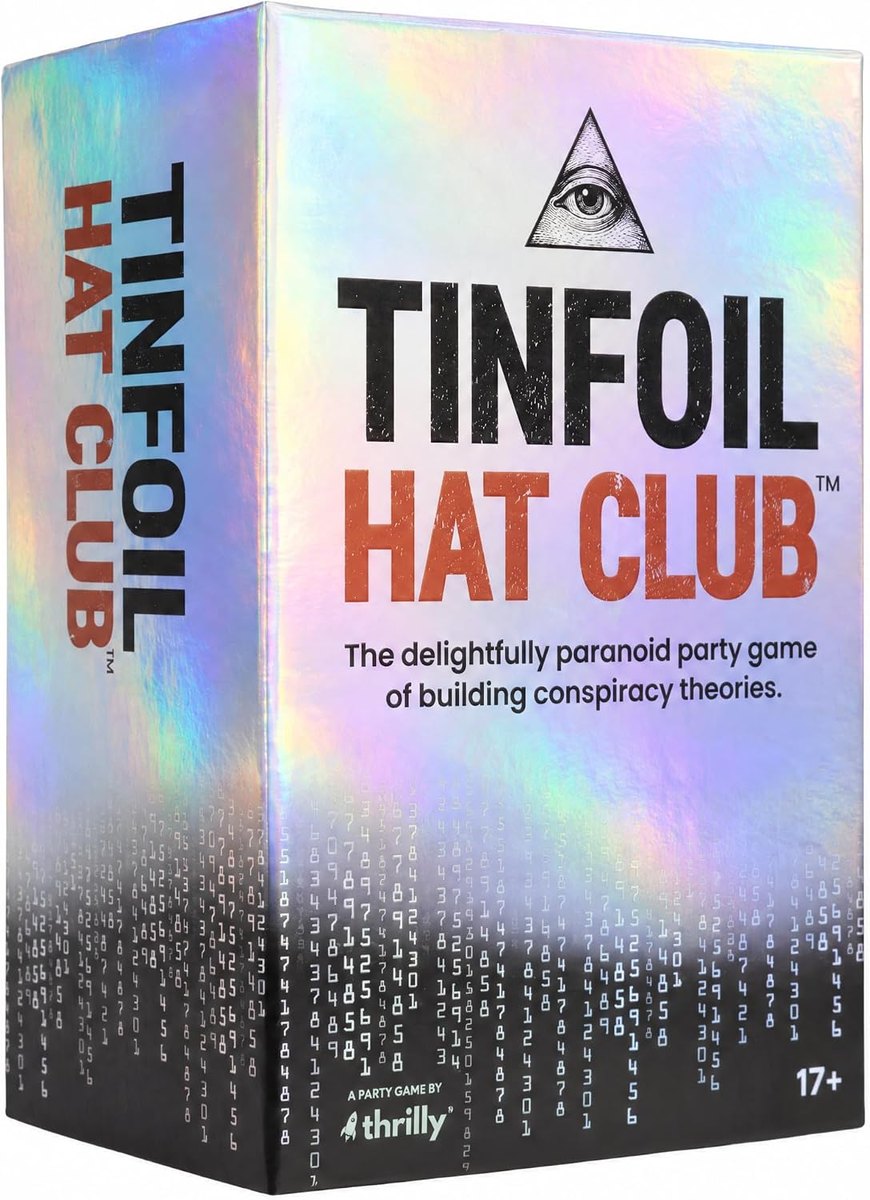

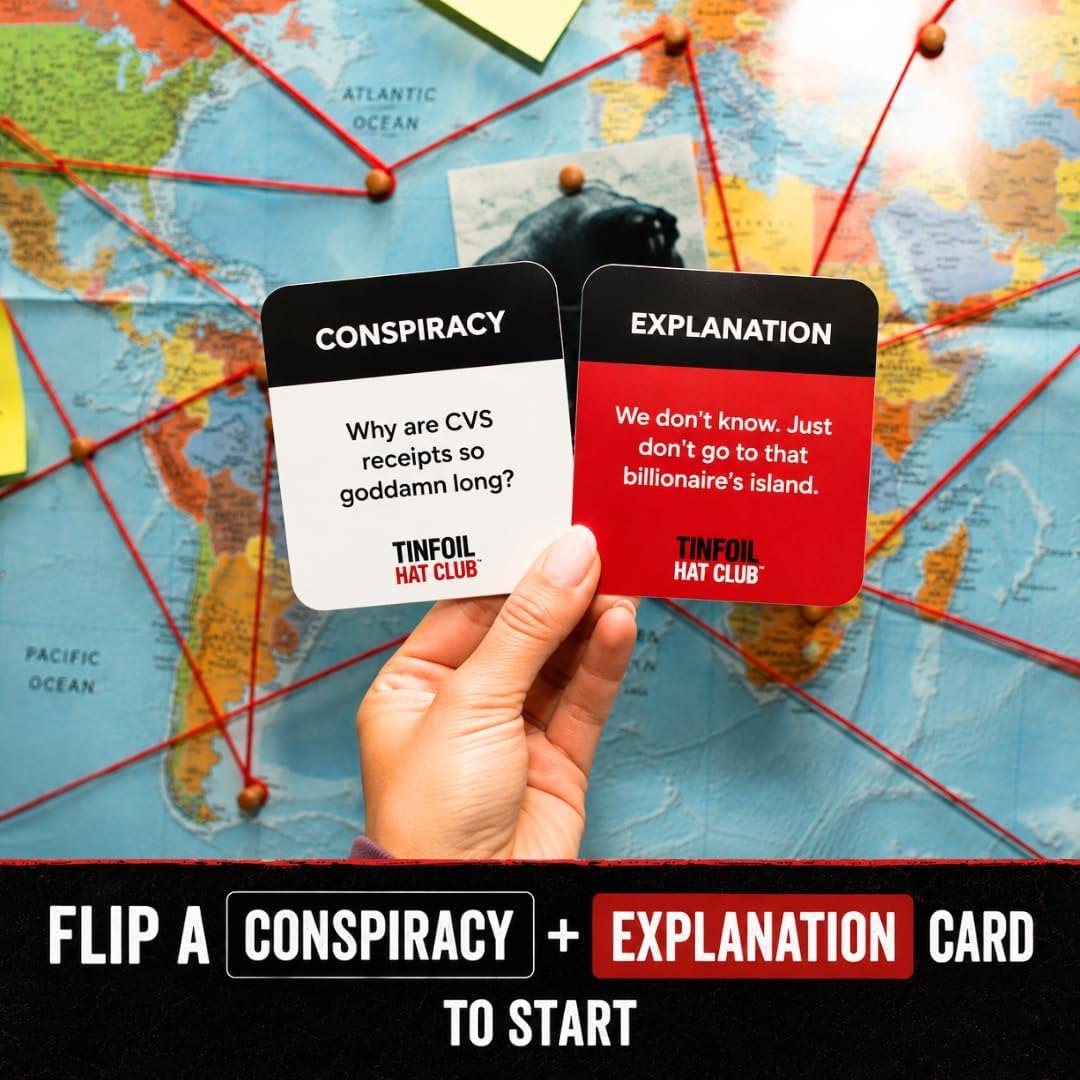
Players pitch an invented conspiracy and the room decides who actually believes their own theory. It behaves like social deduction without the hidden roles, which makes it the easiest way to get a group into that mode.
3+ players players · 30 min rounds · age 17 · $22.99
Group Chat Fill-in-the-blank, generated not printed
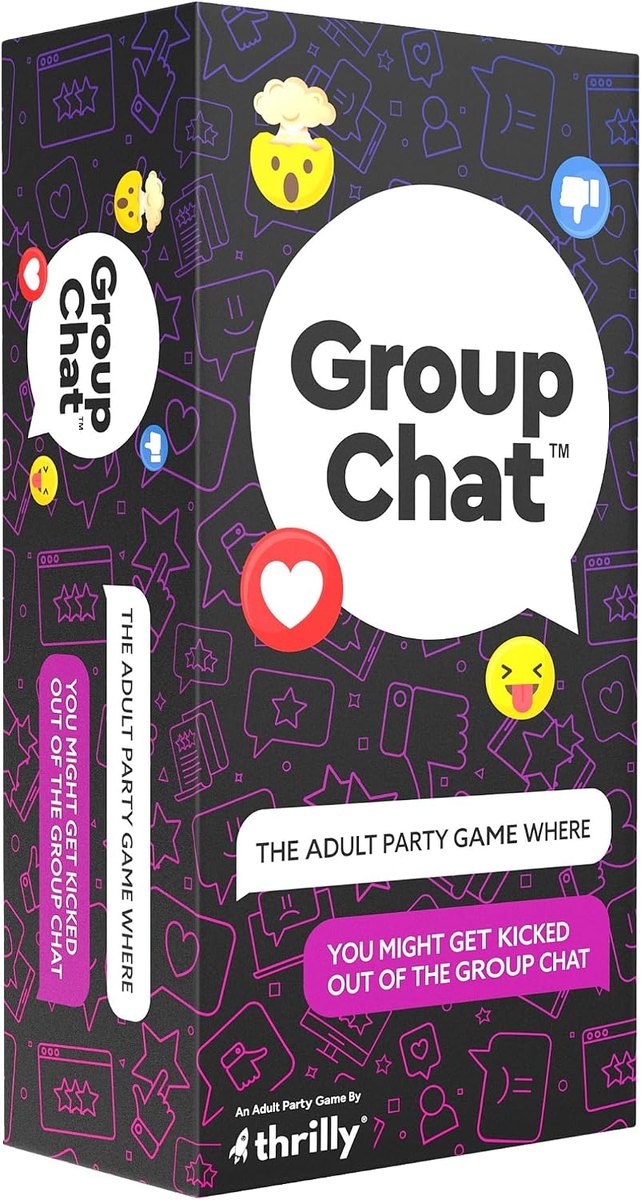
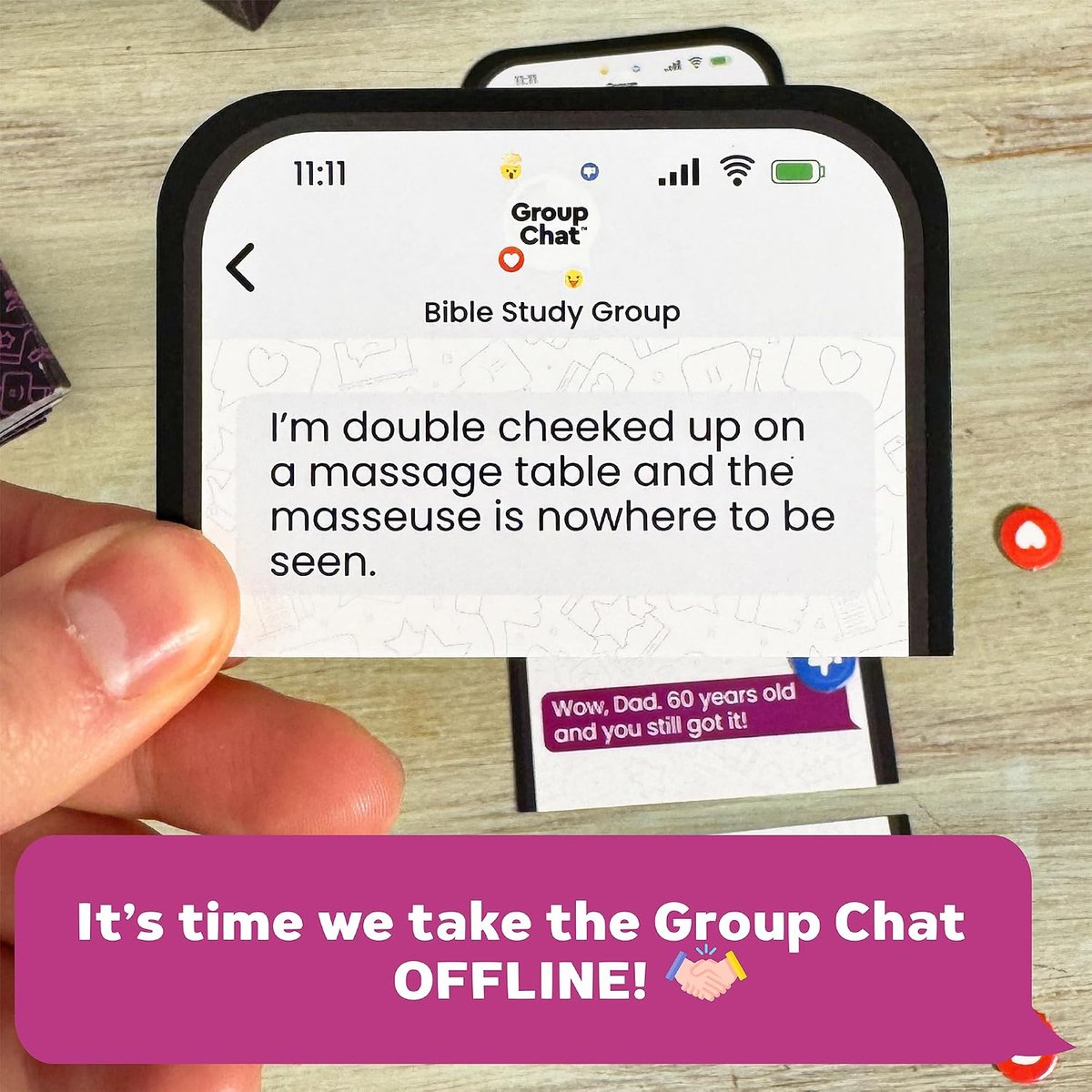
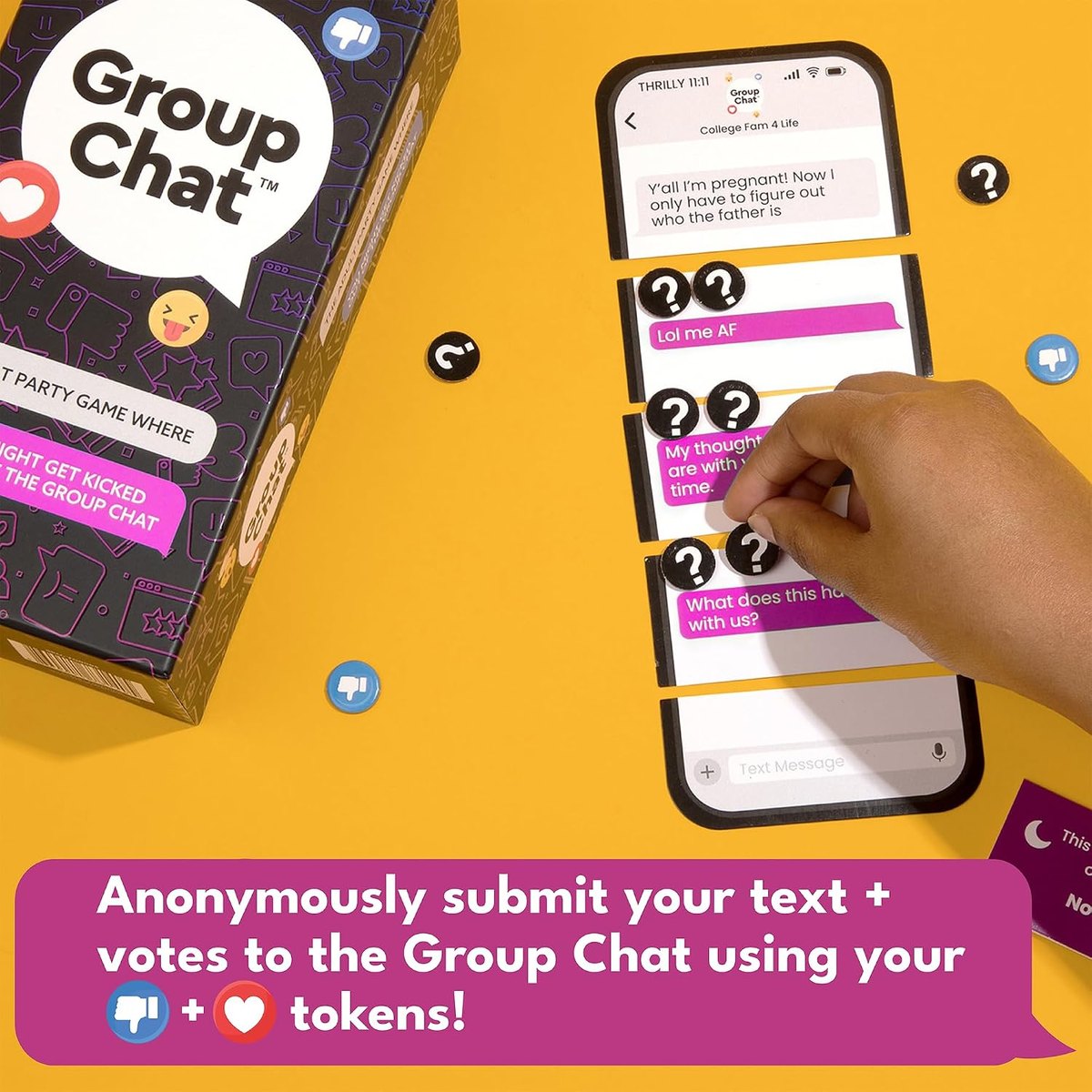
Threads with a reply missing, and you build the worst possible answer. The joke is yours rather than ours, which is the one idea we took from the decade after Cards Against Humanity. Four to ten players.
3+ players players · 30 min rounds · age 17 · $9.99
Sticky Hands! Reflex and physical, family column
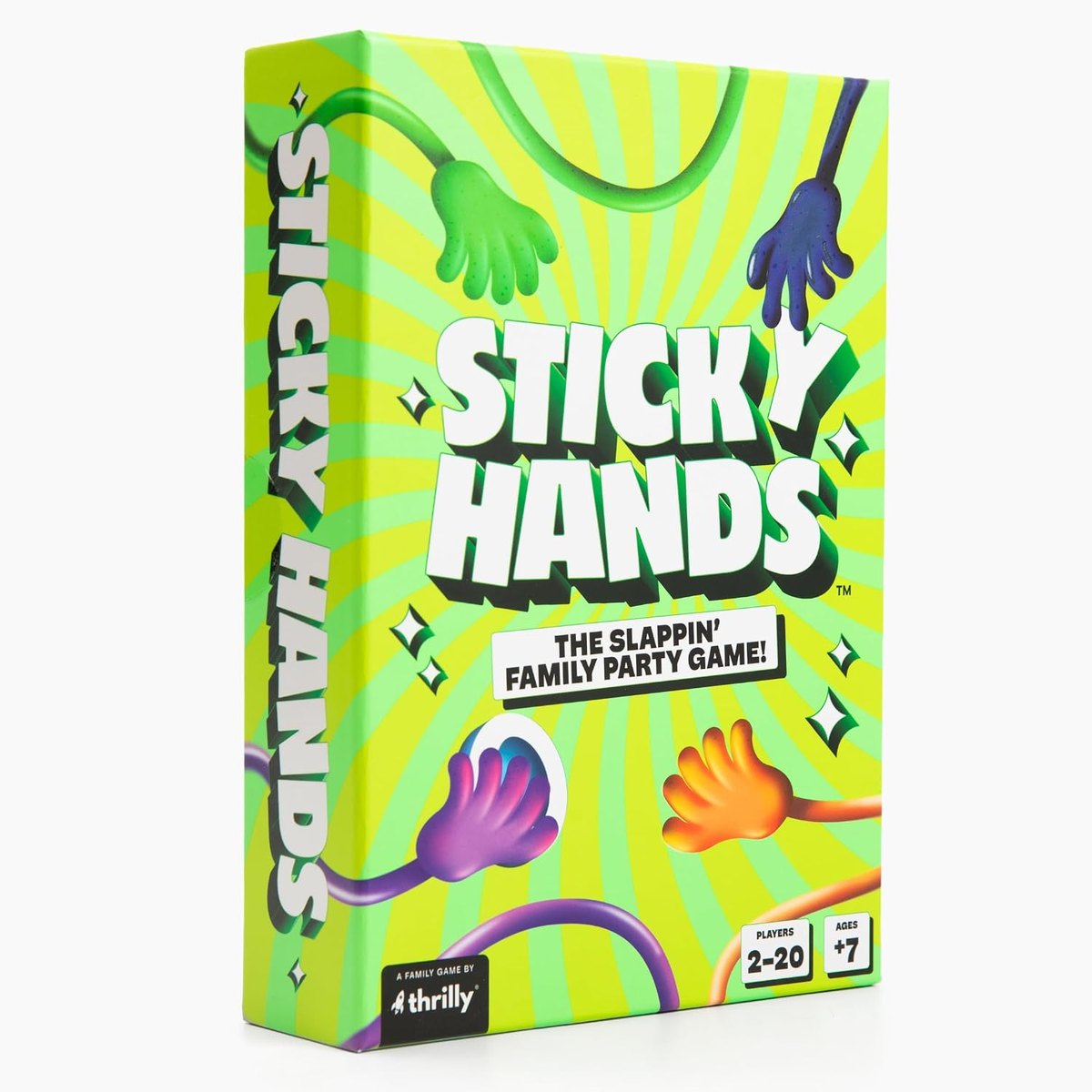
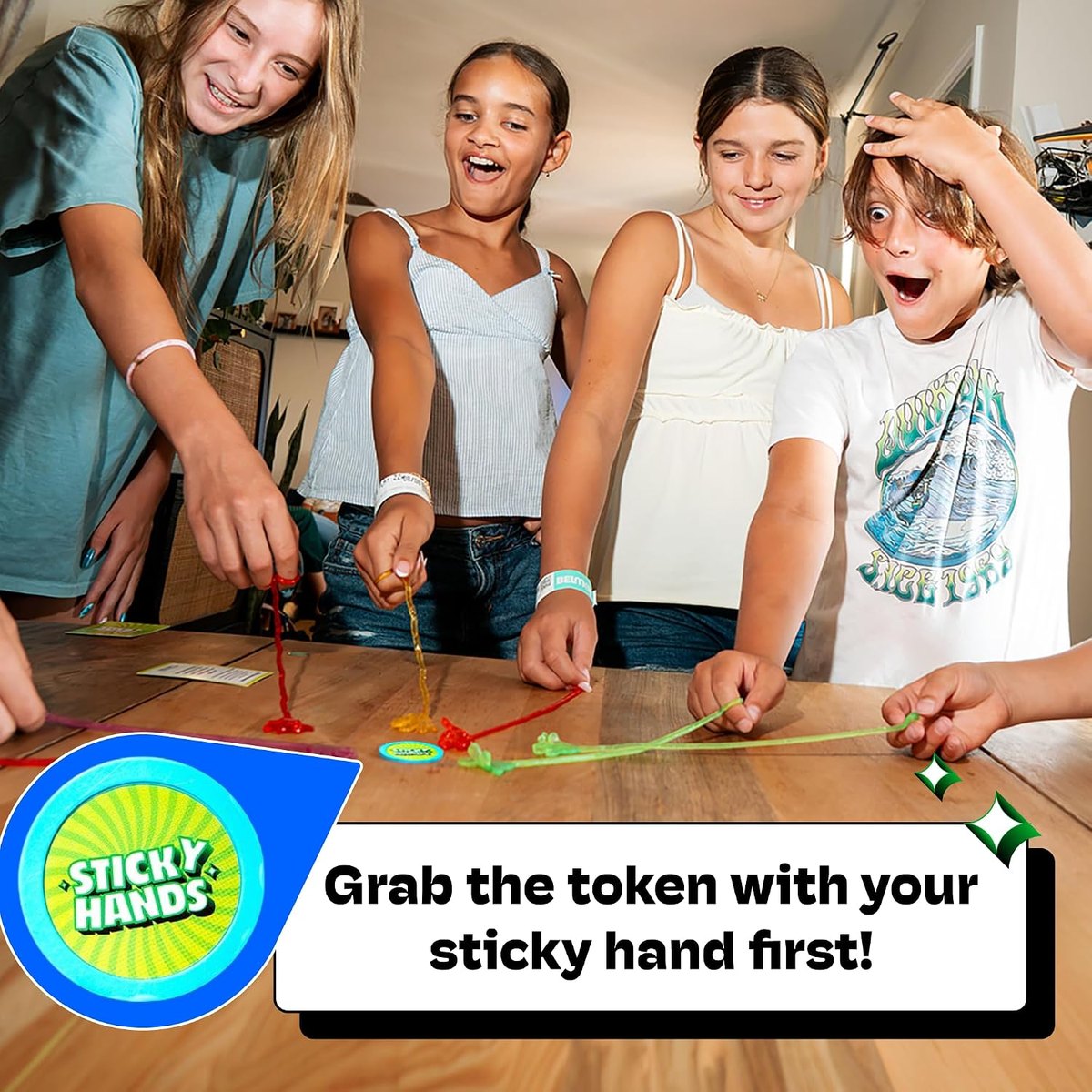
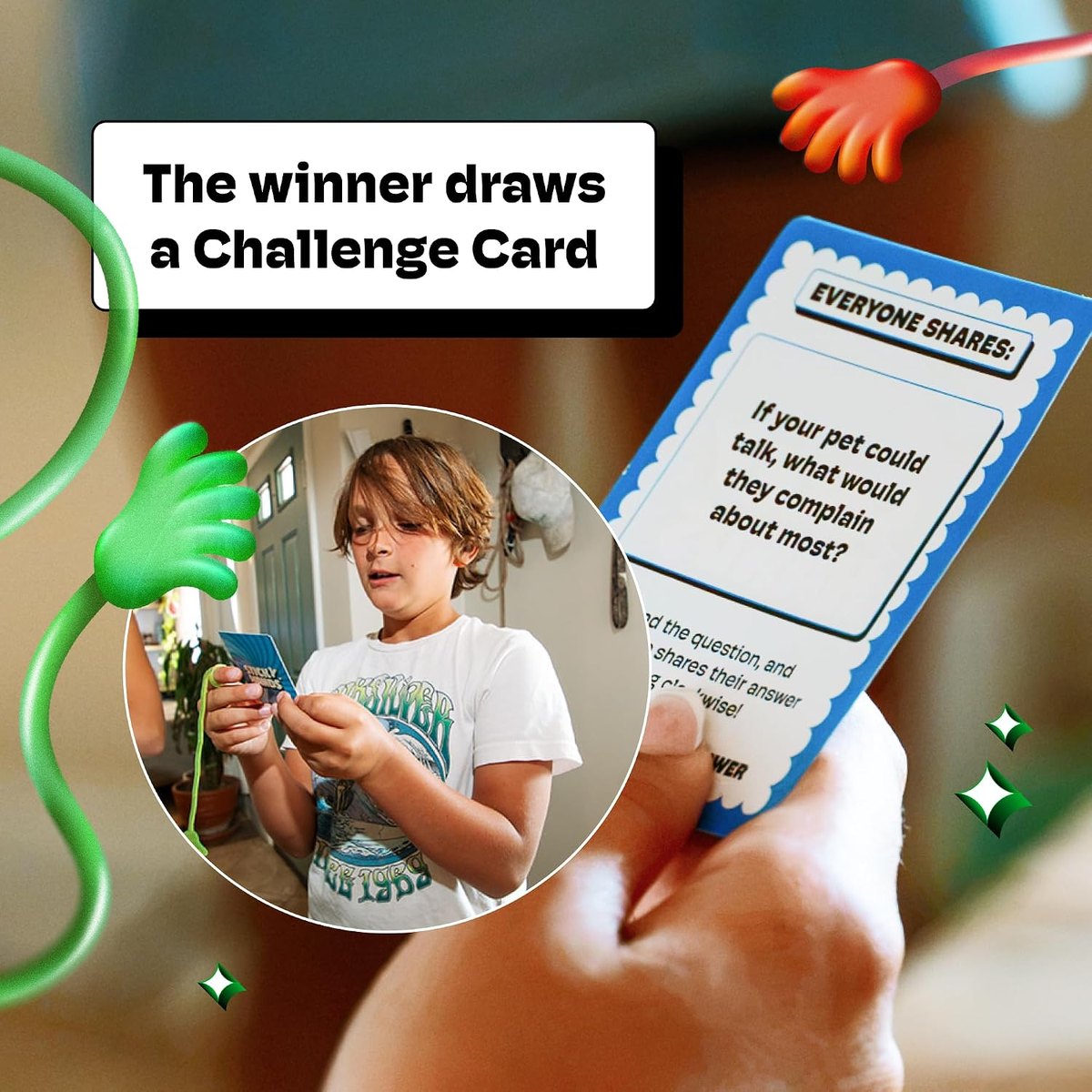
The same race as our drinking game with the drinking taken out and the age on the lid lowered. This is the box for a room with children in it, and a seven-year-old will beat most adults at it.
Up to 20 players players · 15 min rounds · age 7 · $19.99
Photobomb Drawing and performing
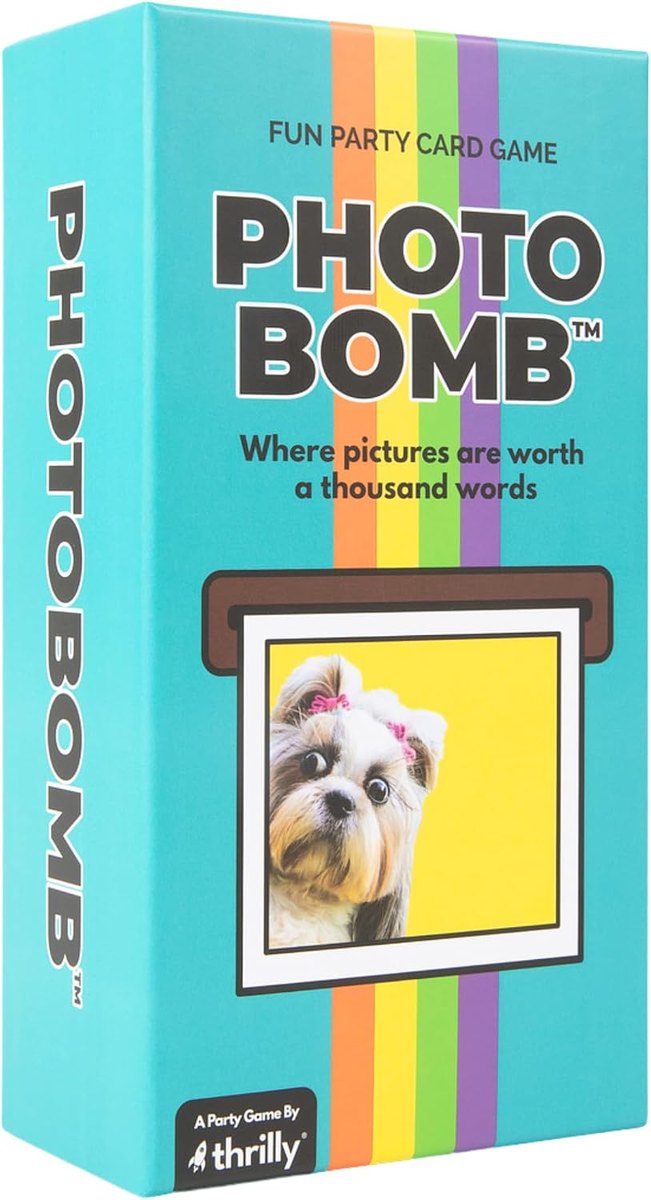
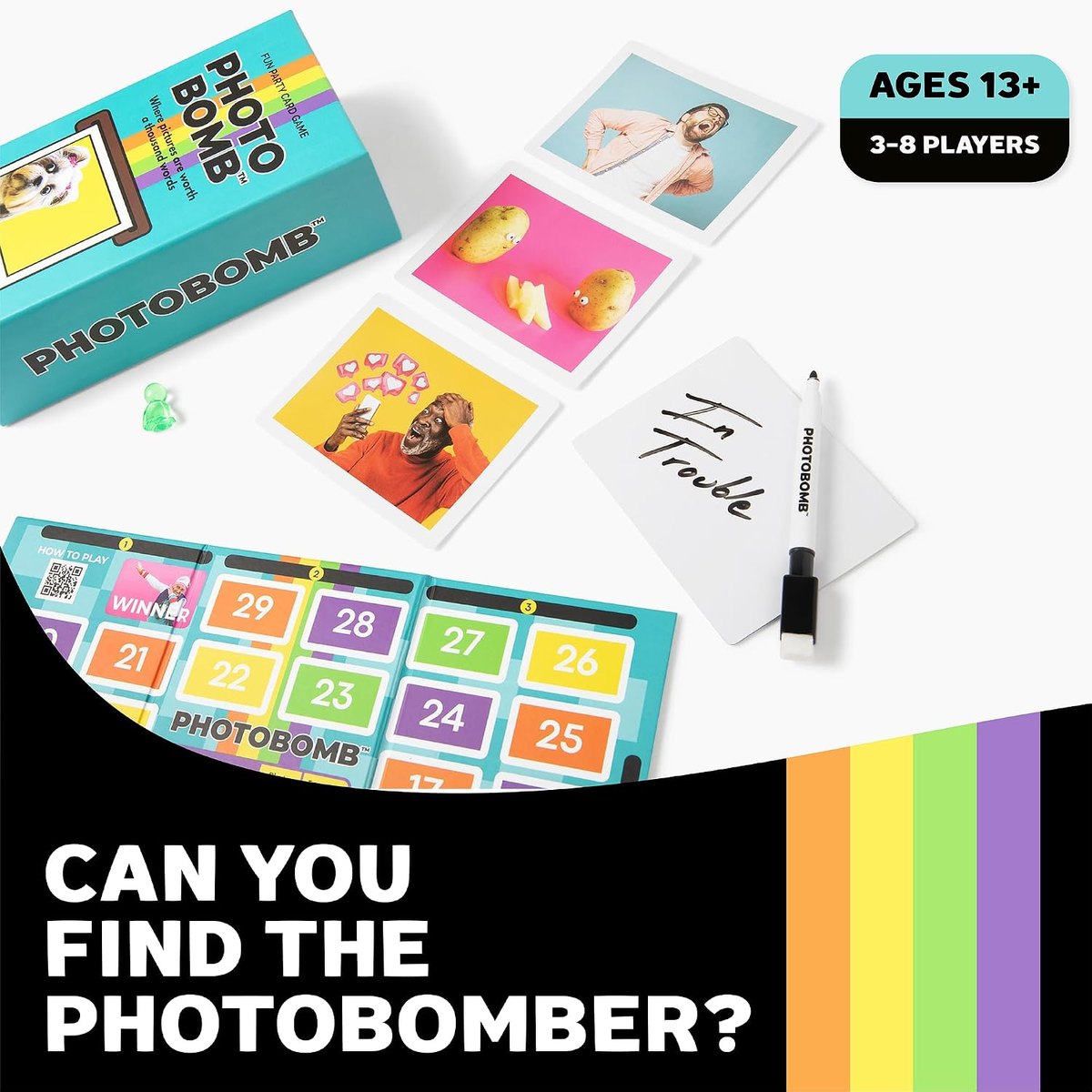
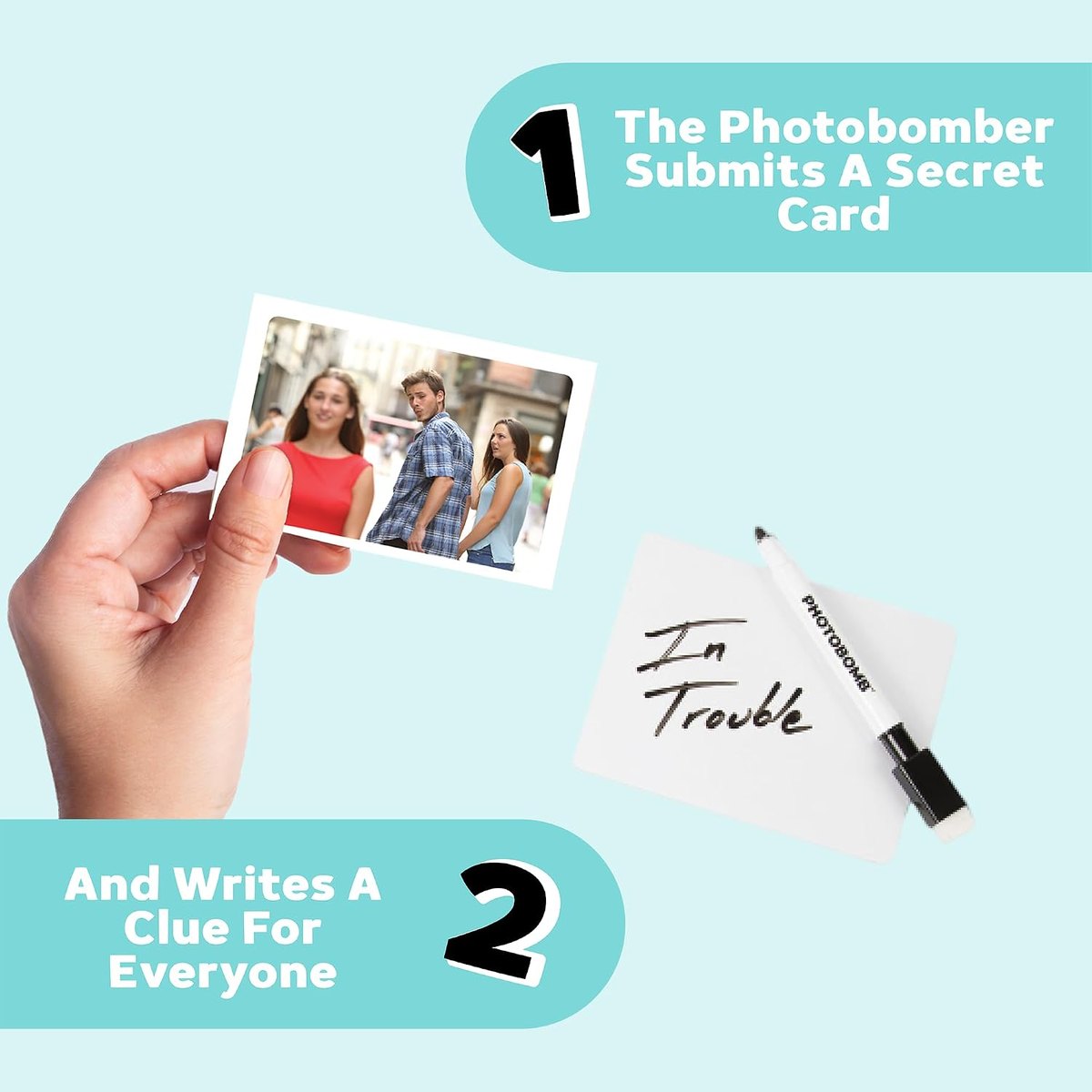
Caption a picture, then work out whose caption is whose. The only box we make that ships with a board and a wipe-clean surface, so it is the heaviest and the least portable thing on the shelf.
3+ players players · 15 min rounds · age 13 · $9.99
Go Fetch! Performing, warm column
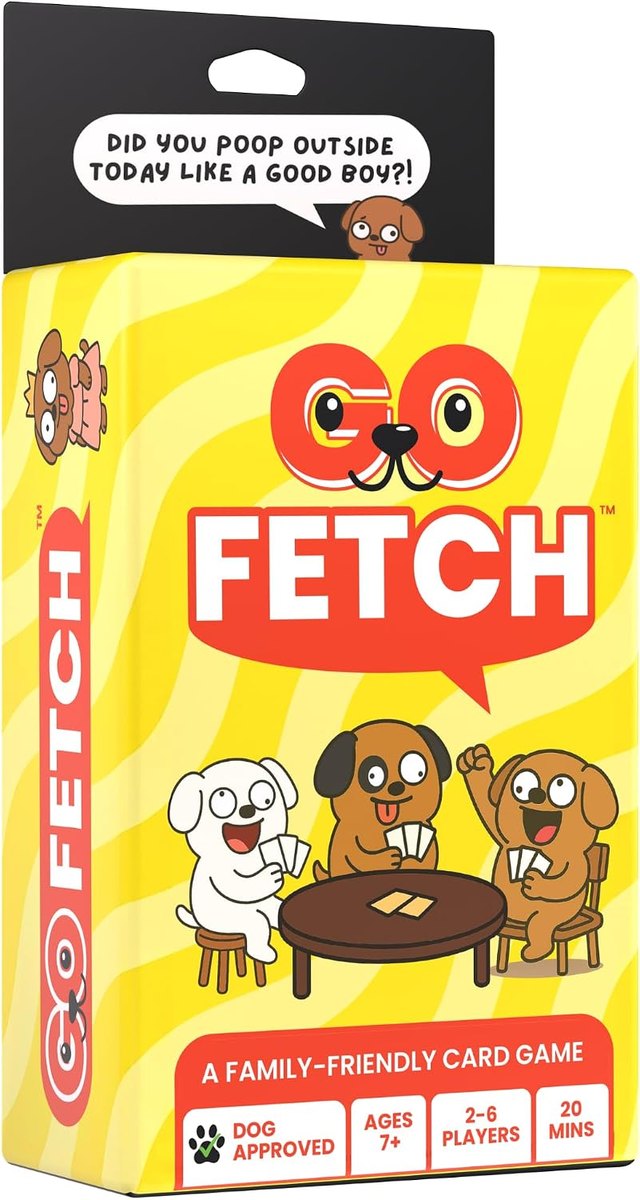
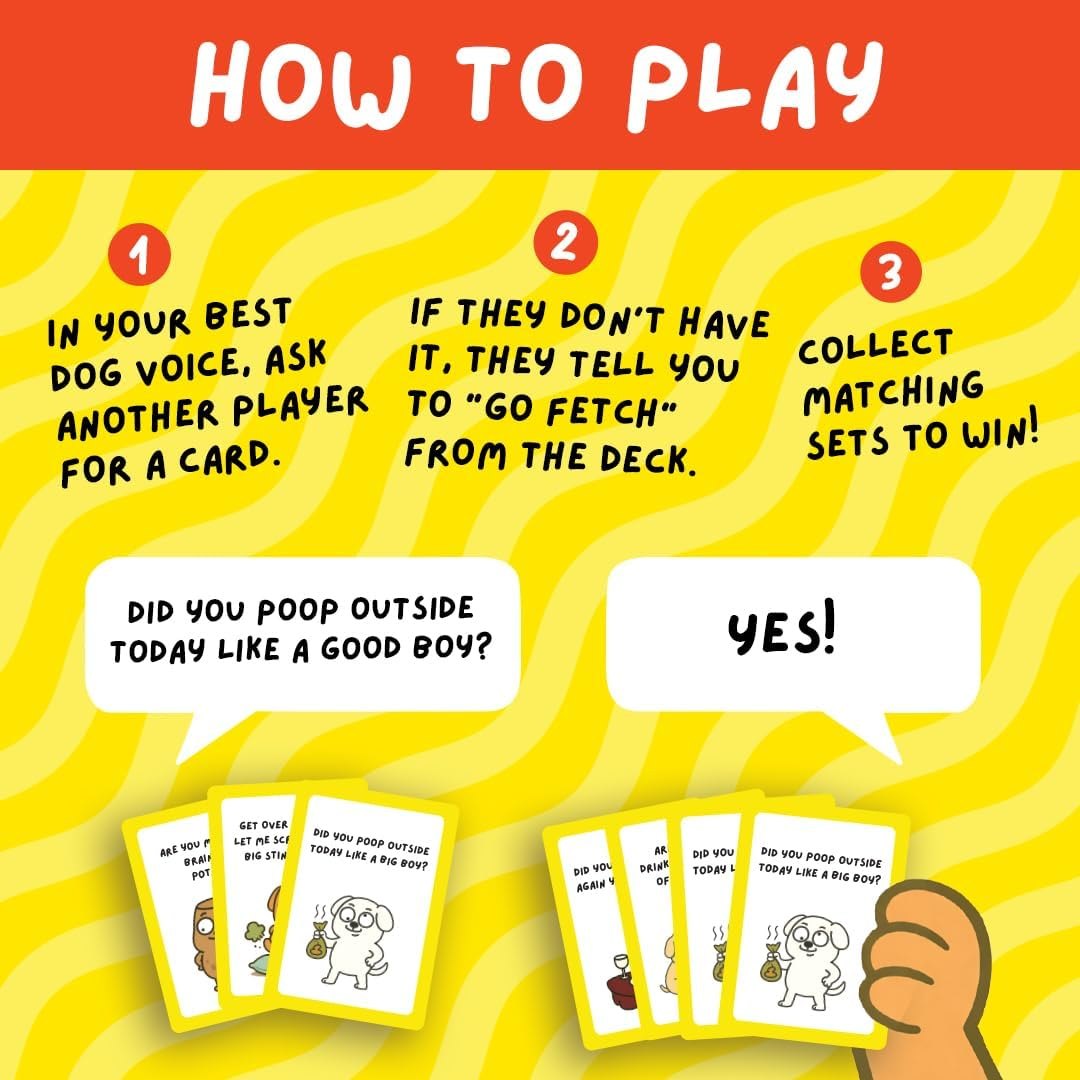
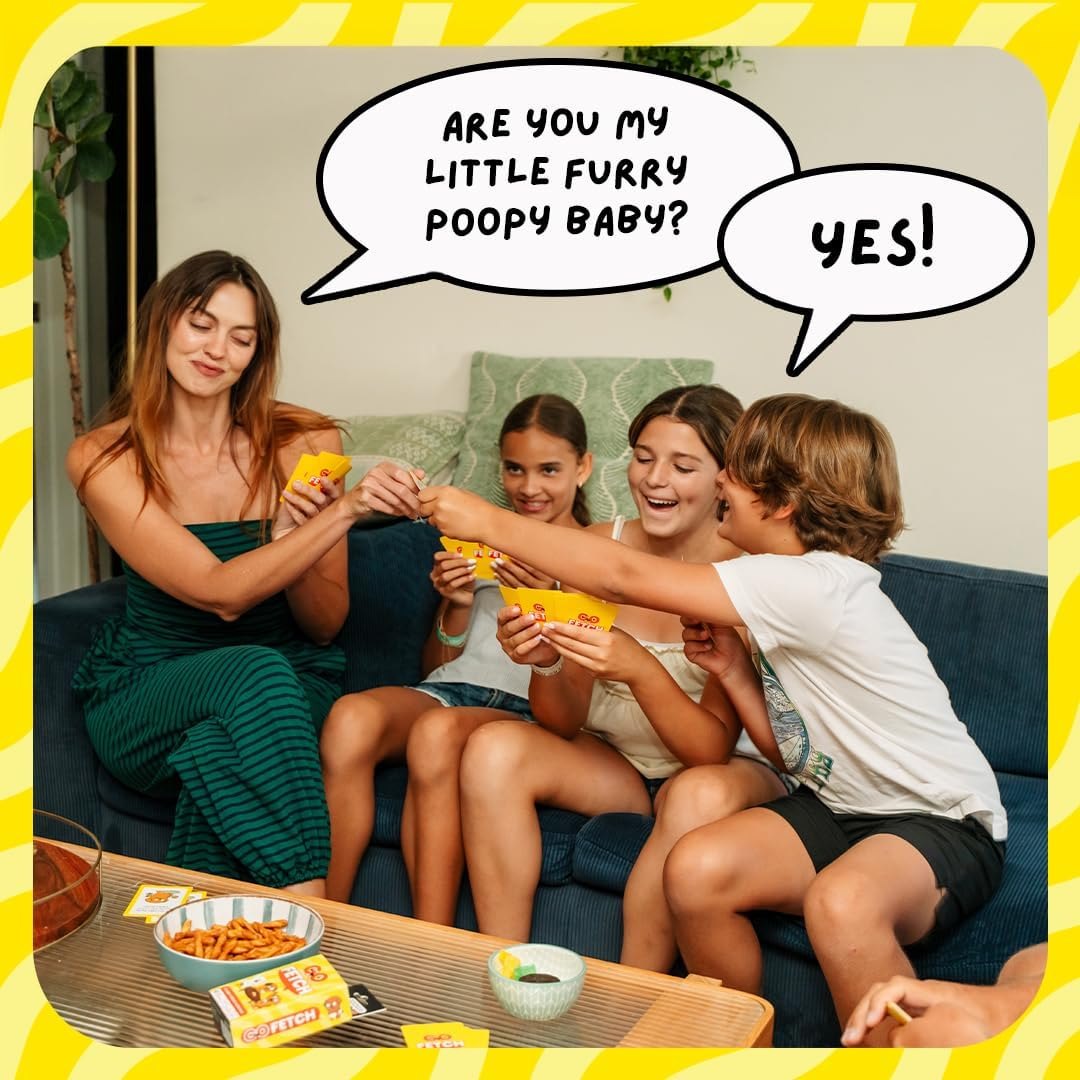
Fifty-two cards of things a dog would say, read out loud in a voice. Absurd rather than mean, which makes it the safe gift when you do not know the room.
2+ players players · 10 min rounds · age 7 · $9.99
Flirt to Roast Ratio Guessing against a hidden target
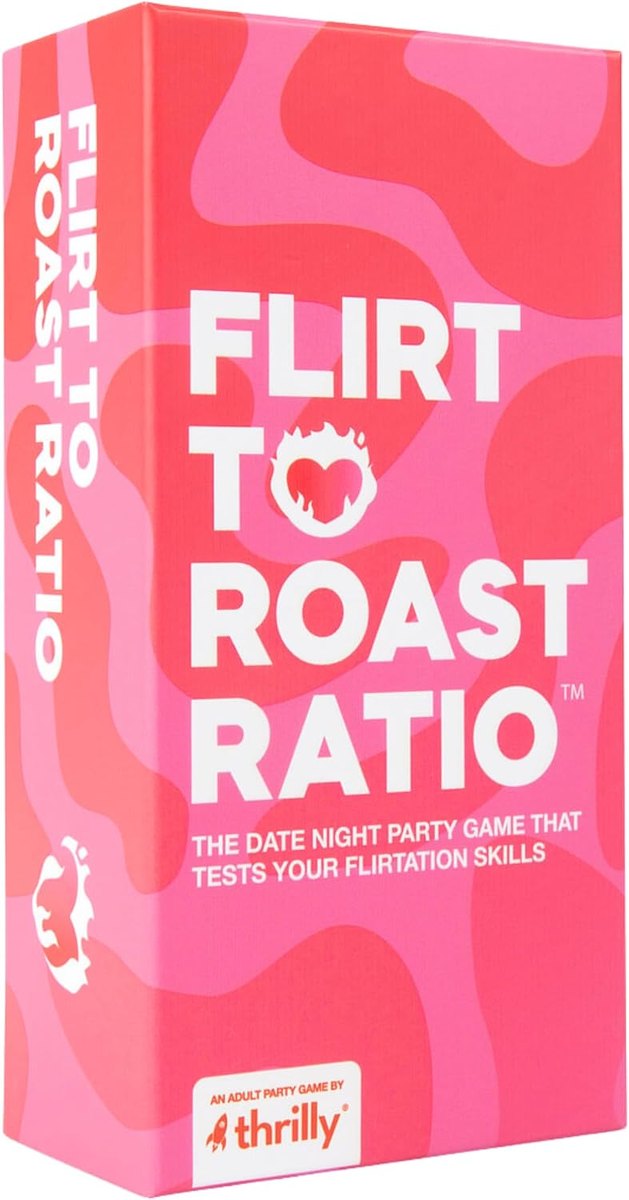

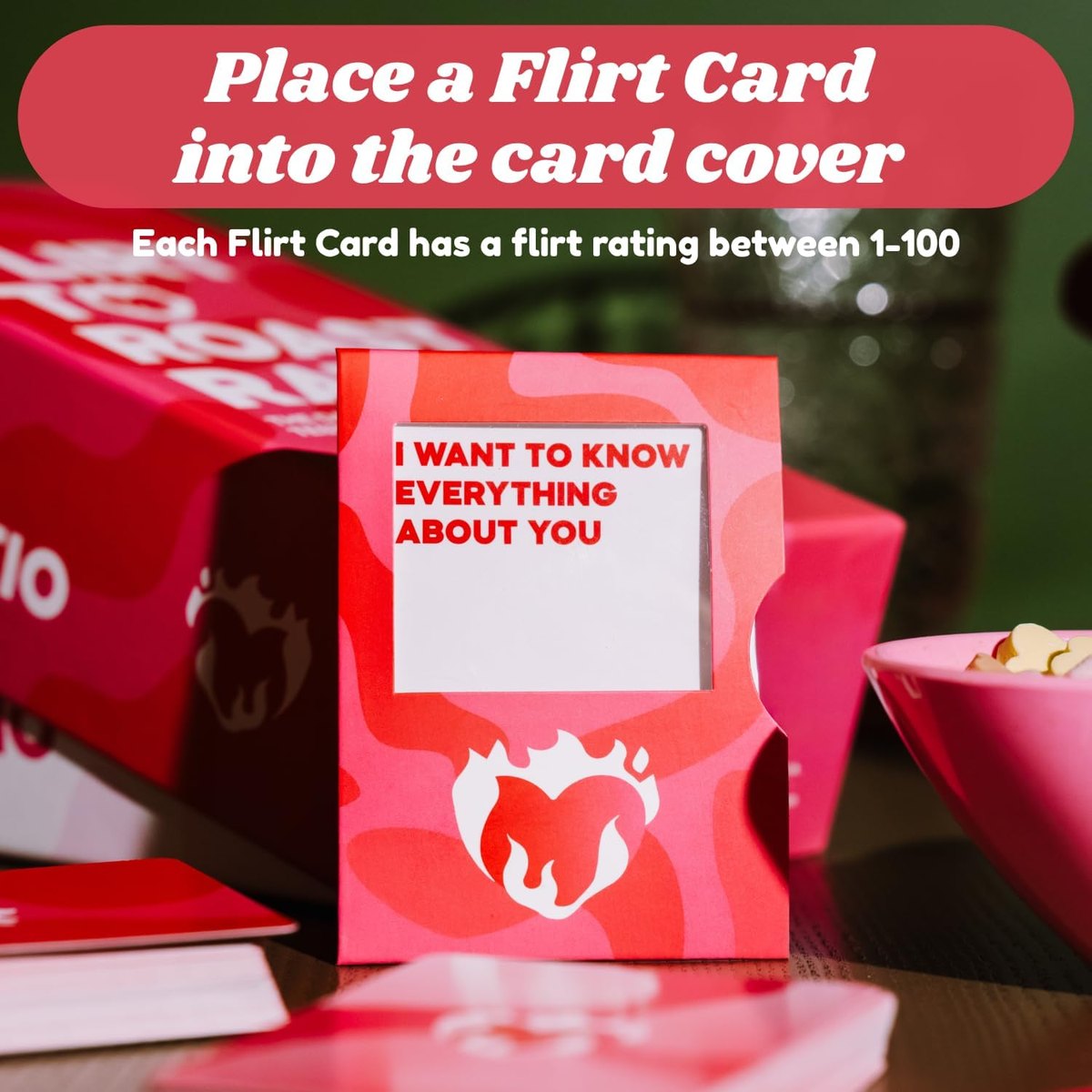
Two players, a deck of prompts and a scale between a compliment and an insult. It is the only box on our shelf built for a table of two, and it works for the same reason Wavelength does: the fun is in being read correctly.
2+ players players · 20 min rounds · age 17 · $19.99
Two shapes we do not make: fill-in-the-blank with a printed punchline, and anything with a long learning curve. Both are well served by the famous titles above and we have nothing to add to them.
What to skip, and why
Not every box deserves a place. These are the patterns we return most often after a test night, and they are easy to spot before you buy if you read the back of the box rather than the front.
- Anything that needs a phone to run a timer, a scoreboard or a voice.
- Decks sold as an expansion to a game you do not own yet.
- Trivia with answers that were current five years ago.
- A game whose best feature is the number of cards in it.
The phone one matters more each year. A party game that hands the room a reason to look at a screen has given away the only advantage cardboard still has. Our boxes use no app for exactly that reason, and the famous titles in this guide do not either.
- Ask: can this be taught while dealing?
- Ask: what happens when a twelfth person arrives?
- Ask: is the funny part printed, or generated by us?
- Ask: does it end, or does somebody have to end it?
Planning the night itself
The games are the easy part. Most party nights that go flat do so for reasons that have nothing to do with the boxes on the table, and all of them are fixable in the twenty minutes before anybody arrives.
- Clear the table completely. A party card game needs the whole surface.
- Put the food somewhere else, on a different surface, before you deal.
- Have two boxes out and the rest away, so the group chooses between two things.
- Start the first game before the last guest arrives, not after.
Light and seating do more work than anything on this list. People play better at a table they can all reach, under a light bright enough to read a card, sitting on chairs rather than across a sofa and an armchair. That is the whole trick, and it costs nothing.
- One chair per player at the same table, even if it means two tables.
- A hard surface for anything with drawing or writing.
- Drinks on a side table once the cards are out.
- A ten-minute box ready for the moment the main game ends.